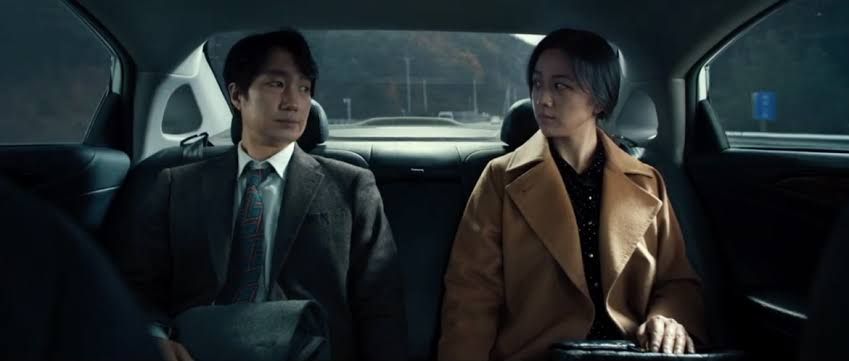
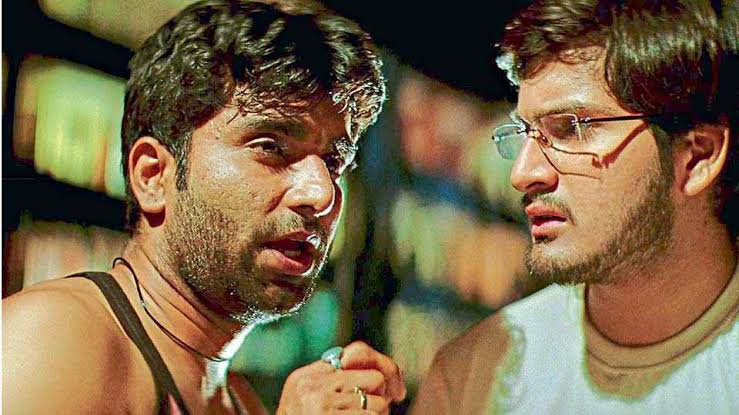
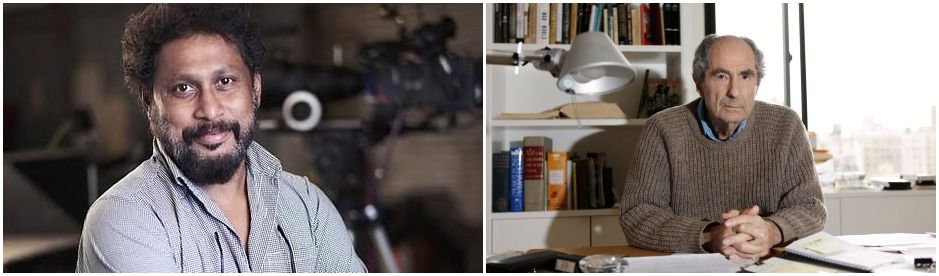
What do Shoojit Sircar and Philip Roth have in common?

Well, aside from them being great artists?

Both have released works that document a procession of surgeries as a narrative frame, I Want to Talk for Sircar and Everyman for Roth. And both have, I am sorry to say, produced uncharacteristic weak efforts. Talk is easily Sircar’s worst film, while I haven’t read enough of Roth’s work to declare Everyman his worst work (although I would be truly disappointed if he has written anything worse than this).

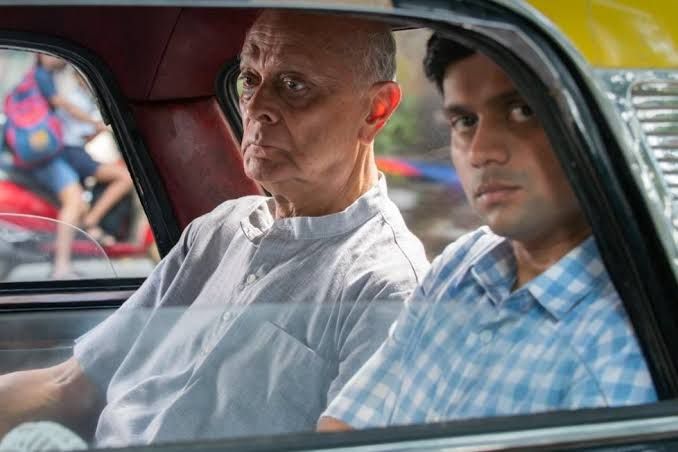
Hospitals and surgeries are miserable things and when enveloped in a miserable story, they become more miserable still. I Want to Talk is a shrill film, filled with snatches of cringe humor (anything to do with Johnny Lever, but some of the hospital scenes too carry this unfortunate strain), mildewy pathos, a supposed clash of cultures between traditional Indian Dad Abhishek Bachchan and daughter that never escapes the confines of caricature, and worst of all, a wrong reassurance that what the film is presenting is worthwhile just because of its subject matter. I paused and checked twice whether this film was actually directed by Sircar. Never in my life did I think I would struggle to finish a Sircar film.

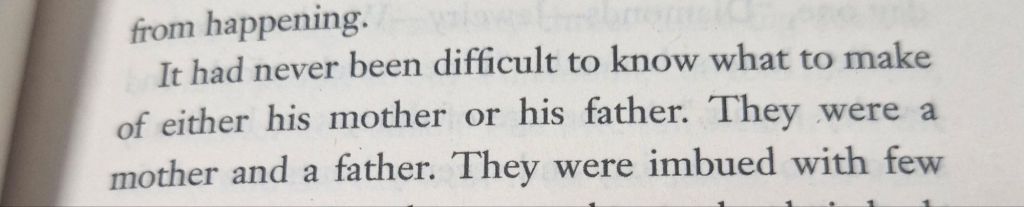
Everyman is somewhat better, but it contains gems like this.

Roth’s novel never succeeds to take off. The protagonist feels like Roth was ticking off a checklist of Roth-isms. He has much in common with protagonists in novels like Sabbath’s Theater, but he’s missing the charm that makes them memorable. ‘Show don’t tell’ is a supposed to be a byline for films, but reading Everyman, you wonder if it sometimes needs to be applied to literature as well. It is of course, a deliberate choice by Roth to frame his narrative around the protagonist’s peripheral characters, but that means he never emerges as a whole character to root for, or to forgive his trespasses. When he bemoans his sons not understanding him, you would have liked to know what his arguments are for his sons being wrong. Roth simply tries to portray his protagonist as too pitiful, uncharacteristically for a writer known for having a level-headed approach to even the most craziest and kinkiest of central characters.

Regardless, when one thinks of Sircar or Roth, these are hardly the titles one will think of. For myself, I’ll chalk them up to the occasional failure and continue enjoying Sardar Udham or The Human Stain or anything else of their myriad filmo/bibliography.

Things You Only Notice About The Godfather When Watching It for the 450th Time

I was finally able to watch The Godfather on the big screen* for the first time and noticed some things (perhaps new only to me) that had not gotten through even after watching it so many times.

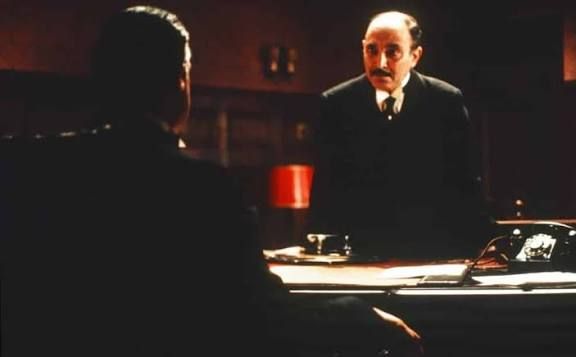
  1. All the big names in the cast get all the deserved credit but Salvatore Corsitto has such a crucial role to play, setting the tone and pace for the whole trilogy.

He’s agitated but keeps it under control. His anger threatens to spill over but he is composed. He so simply lays out that the last desperate thing he will do, he will do it for his family. It’s a theme that recurs throughout the whole trilogy, not the least for the man sitting opposite him.

2. The first transition from the darkened room to the wedding celebration is jarring. Gordon Willis’ revolutionary cinematography has kept us in the dark throughout (sometimes entire sides of a face are obscured by darkness) and then the gaudy wedding hits you, with its sunshine and loud music and the big crowd and the cacophony of noises.

3. As the baker promises, the cake is indeed enormous.

4. Sonny seemed weirdly competent this time. As Vito goes to the hospital, Sonny and Tom Hagen are the two in charge. While Hagen is seen as the voice of the reason, later Micheal adopts the same ultra-aggressive strategy as Sonny and Hagen is seen as not fit to be a wartime counsellor. My opinion of Sonny changed from a buffoon to charismatic but hot-headed, both to a fault.

5.

That’s Sofia! She’s the child being baptized in the iconic baptism scene.

6. Al Pacino’s performance is a tour de force and each viewing reveals nuances in his acting. On the big screen, I was struck anew by how much control he exhibits while still letting a whole range of emotions play across his face. When other actors try it, they come off as wooden. But Pacino’s face is always expressive, the lips upturned, the eyes not dead but steely. It’s no wonder Pacino gave up on this style after Part II. It must be hard to project that iron will every time you are on screen.

7. There’s only one reference to Sonny’s gifted manhood. This is just as well. For those of us who have read the book, the frequent references to Sonny and his mistress’ genitals (an entire subplot included) is awkward and unnecessary.

8. The Corleone kids are the epitome of innocence and purity. When Vito comes back from the hospital, his grandkids are the first to interact with him. Coppola does not depict them as wise beyond their years because of their association with a crime family. Instead, they are very much shown as sheltered. This also goes well with Vito’s determination to stay out of drugs for the sake of kids.

9. Al Neri pretty much takes Luca Brasi’s place as the family’s enforcer. Except he does not stick out like Brasi does. He is more of a methodical killer, which is in line with the master he serves. 

10. The Godfather is just as good the second, tenth, 100th, 450th, or millionth time of watching as it is the first time.

*Customary fuck you to the Indian Censor Board for deleting some shots.

Picks for the NYT: My 10 Best Films of the Century

So, the New York Times has asked readers to vote for the best films of the 21st century (here) and I voted myself. Here are my picks, along with the alternatives that nearly knocked them out, which is my roundabout way of presenting my top 20.

1. Dogville (dir. Lars Von Trier)

If you ask me what is a film you wish you had made, this is my answer. It is an intoxicating blend of formal rigour, storytelling bravado, bold-faced theme-tackling, and ideological dissonance. As I sat awestruck, I recognized I would never look at film the same way again.

Alternative

Dancer in the Dark (dir. Lars Von Trier)

Von Trier makes variations on the same story, but manges to spruce them up with a different conciet every time. While in Dogville, it was buy-into-this-if-you-can provocation (both in terms of the story and the Brechtian bare soundstage setting), here it is a musical that both plays homage to them and makes fun of them. Björk delivers perhaps the greatest performance ever by a non-actor.

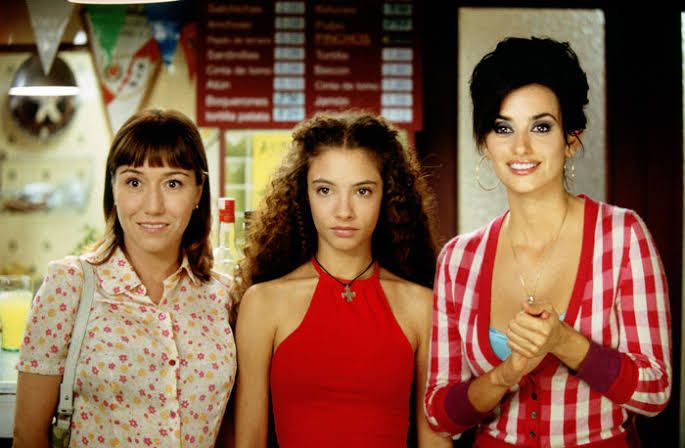
2. Volver (dir. Pedro Almodóvar)

I wrote my first piece of film criticism after watching this film (unreadable). The emotional wringer the film put me through had such an effect that, with a tear in my eye, I grabbed the nearest person I could find and expounded in incoherent terms the impact it had on me. I bit his ear off until he made up an excuse to leave the house. Didn’t matter, I could have talked to the wall about my fasnication with Volver. And I did.

Alternative

The Piano Teacher (dir. Michael Haneke)

It was a tossup for me whether to go with Almodóvar’s best or Haneke’s best of the century. All of the films I have mentioned thus far have been anchored by exceptional lead performances, but perhaps none is equal this century to Isabelle Huppert here. A parade of degradation underpinned by startling vulnerability, a film where the lines between tough love and hate blur and then disappear. 

3. Certified Copy (dir. Abbas Kiarostami)

The rare film where your interpretation of it can change from scene to scene. Kiarostami draws you in slowly and before you can know it you are surprisingly lost but fully intrigued.

Alternative

Before Midnight (dir. Richard Linklater)

Another film about a couple bickering, this one more straight-laced than Copy, but no less effective. As much as I would like to see Jesse and Celine return, I think this is a great ending. Open-ended (hey, again a little bit like Copy) and a direct refutation of happily ever after, to me it is the best film in the trilogy. That hotel room scene is still entrenched in my mind.

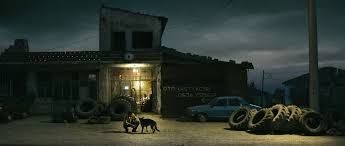
4. Once Upon a Time in Anatolia (dir. Nuri Bilge Ceylan)

Expansive, remorseful, weary, and tense, rare is a film that builds mood like this film does. You could watch this film with the subtitles and audio off and still come away with appreciation. Anatolia’s picturesque cinematography and ruminative ending are hard to shake off.

Alternative

About Dry Grasses (dir. Nuri Bilge Ceylan)

I avoided anything too recent and I do think Anatolia is Ceylan’s best, but Grasses is another hard film to shake off. Instead of a thriller narrative and sprawling cinematography, this film is more talky and enclosed in small spaces but is no less brilliant.

You can find me raving about the film here.

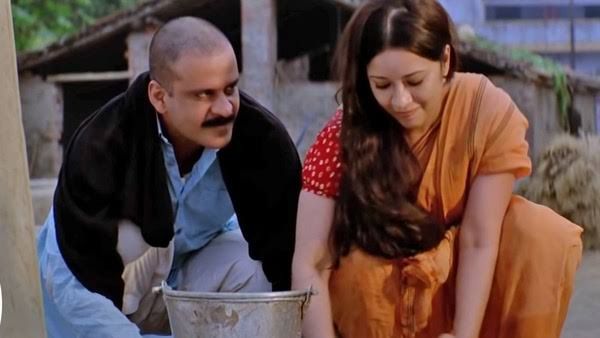
5. Gangs of Wasseypur (dir. Anurag Kashyap)

Hey, gotta have that Indian representation right? I could think of no better representative for Bollywood than Gangs. It combines old-school masala populism with more indie methods, creating a bloody, violent, but still funny and sometimes even tender saga. Malfunctioning gun to my head, I would probably pick Part II if you were to split these into two like for the Indian release. But I am glad it is just one film for international purposes, because both parts are brilliant.

Alternative

Raman Raghav 2.0 (Anurag Kashyap)

Wasseypur is my definite choice, but Kashyap will give you a lot of options. There’s the griminess of Black Friday and Ugly. There’s the elliptical No Smoking. There’s the more classical mastery of Dev D and Gulaal. But the film that stuck in my craw the most is this one. His dirtiest, grimiest, sleaziest, most represhensible film and all the better for it.

6. The Master (dir. Paul Thomas Anderson)

Featuring two fiery performances from Joaquin Phoenix and Philip Seymour Hoffman, and a quiet but no less ferocious turn from Amy Adams, The Master is a perfect concoction of cinematic brilliance, as heady as any Phoenix in the film itself drums up. Some scenes startle, like the shouting in prison scenes or the initiation scence, while some are just heartbreaking, like the finale.

Alternative

Knight of Cups (dir. Terrence Malick)

The greatest disservice you can do to Terrence Malick’s oeuvre is grouping To the Wonder, Knight, and Song to Song together. They of course share similarities and were shot in the same way, but are so distinct, not only in terms of subject matter but also in terms of quality. Wonder is like a quiet kid, nothing majorly wrong with it but hard to love. Song is like a wild party hosted at an upscale house by usually self-serious people, kinda fun but ultimately a drag. But Knight of Cups? It hits just the sweet spot between funny, profound, ridiculous, heavy, tense, quiet and loud. Among the trilogy, it is the best structured (the tarot cards help) and the best overall of Malick in the 21st century (my hottest take in this list).

7. Embrace of the Serpent (dir. Ciro Guerra)

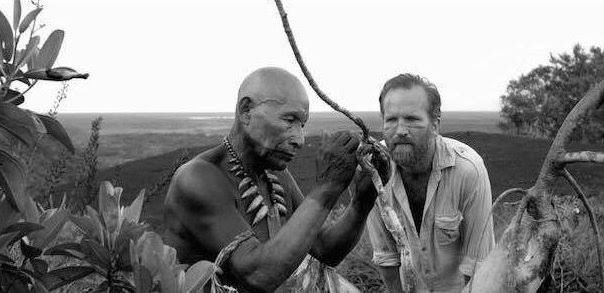
This beguiling film left the audience perplexed at my local film festival (a rare film not to receive a standing ovation) but I was enraptured throughout. It’s in the best mold of Aguirre, the Wrath of God but adds a trippy element, and I am not just talking about the drug-induced psychedelic trip. Along the way it asks pertinent questions not only about colonialism but about the nature of contact itself. The scene where the European Theo thinks science should be withheld from the tribes in South America lest they forget their culture still puts me in a philosophical reverie.

Alternative

Inland Empire (dir. David Lynch)

(Could just as easily have been Mulholland Drive)

Lynch’s trippy, envelope-pushing, balls-out, meta, digital epic is a dazzling experience. It’s a drug trip gone wrong and oh, so right at the same time. It’s a smorgasbord of horror, comedy, road film, mob thriller, Hollywood inside baseball, and God knows what else. It feels like something you’d dream up after eating a plate of Garmonbozia. And it’s a trip worth taking again and again.

8. The Irishman (dir. Martin Scorsese)

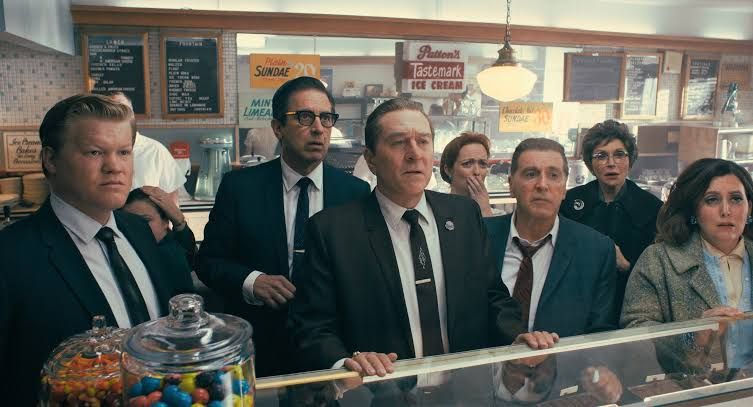
There could have been a complacency, both on the part of Scorsese and on the part of the viewers. Scorsese could have coasted on his name and replayed the old hits. The viewers could have lapped it up and basked in the glow of nostalgia. Instead, Scorsese does it again and delivers once again one of the finest mob films ever, no small feat considering how packed the genre is with them. This is a film that recalls the Godfather trilogy, Once Upon a Time in America, and obviously, Scorsese’s own mafia films, but it still stands steadfastly out as its own thing. By showing the mobsters as failed fathers, old diabetics, and old jailmates, it de-romanticises them thoroughly.

Alternative

The Wolf of Wall Street (dir. Martin Scorsese)

WOWS ignited a whole host of responses upon its release, with some accusing it of glamourising the vapid lifestyle of Jordan Belfort, while another equally strong contingent argued for its satirical qualities. However, the experience of watching this film does not happen along these lines for me. It’s a film so uproariously funny that I no longer give a damn whether I am laughing with or at them. After the film is over though? Well, of course the satire is obvious and only someone unfamiliar with watching a film before would think Scorsese is putting these people on a pedestal. Which is a lot of people apparently.

9. The Disciple (dir. Chaitanya Tamhane)

In storytelling, more often than not the focus is on the extraordinary, starting from The Epic of Gilgamesh itself. The Disciple is extraordinary however not because it focuses on the special, but because it focuses on the ordinary. Sharad is an ordinary man with somewhat of a talent in Indian classical music but it’s not of a nature that would carry him to glory. He has ordinary faults, sexual urges, need for companionship, money, and the need for recognition. He is a man who is jealous both of a popular singer on a reality show and a man who sings on trains for money. Unflinchingly relatable for anyone who has loved something which has not loved them back.

Alternative

I’m Thinking of Ending Things (dir. Charlie Kaufman)

Here’s another film about a man with a grandeur fantasy but of uncertain means to reach it. But is it really about him at all? Or is it about her, the one who is going to end things? The vagueness of the film is a strength because its individual scenes are so strong they can have their own little interpretations by themselves. Who knew a piece of Pauline Kael film criticism could be compelling cinema?

10. Decision to Leave (dir. Park Chan-wook)

I first watched this film at home and knew I had to experience it on the big screen, which I did and it was glorious. Like the best thrillers, it is not the plot mechanics that impart the film its importance but the general mood established. Park directs with such a deft hand that you are gripped throughout, even while the neo-noir trappings suggest there is no happy ending in sight.

Alternative

Burning (dir. Lee Chang-dong)

Another off-kilter Korean thriller, Burning stays true to its name. The slow burn allows all of the protagonist’s anxieties and maybe delusions to come to the fore. It also allows the film to show off its impressive cinematography and the centerpiece of the film, where Hae-mi dances is an achingly beautiful scene. I was unsure about my response to the film but this scene converted me into an adherent and I was grippedthroughout the rest of the film.

Final Thoughts

  • I am satisfied with the breadth of my selections, covering four continents and when you consider the nationalities of the directors, nine countries.
  • I am sure I just haven’t watched enough films from Africa and Australia.
  • No women directors unfortunately but Céline Sciamma’s Petite Maman came close. Her Portrait of a Lady on Fire is worth a mention too.
  • I hesitated with Shuchi Talati’s Girls Will Be Girls due to its recency but it’s another fine mention.
  • No animated films either but some that came close included Waking Life, Spirited Away, Up, The Wind Rises, The Tale of the Princess Kaguya, and The Boy and the Heron.
  • Really I have already stretched the 10 film limit to 20 and a lot of mentions so I could have done a top 20, 50, 100, or even a 200 happily.

Sister Midnight Review

The opening stretches of Sister Midnight are dialogue-free and reveal a propensity for the silent gag. Start with the credits themselves, where the credit of the actor playing the husband (Ashok Pathak) is displayed where he should be, beside his wife (Radhika Apte). Instead, he is slumped over, sleeping, already a premonition of his role in their married life.

For about the first third of the film, Sister Midnight is a domestic comedy. The wife, Uma being her name, finds herself inadequate in married life, whether it is cooking or finances or the general maintenance of the household. But the husband is even more inadequate too, finding more joy in the drink than in the woman.

Gradually, the film starts to show its teeth. The silent comedy of the early parts is replaced by venomous words, not only between the couple, but also Uma’s interactions with her neighbours. Through Uma, director Karan Kandhari presents a picture of Mumbai that is repulsive, without a shred of romance. 

Even the tourist hotspots are shot unmercifully. When Uma visits the Chowpatty, all she sees are people crying. Heaps of trash are never far away. At one point, a character asks whether to take a turn from the left trash heap or the right trash heap. You can almost smell the dung, the rotten vegetables, the half-eaten food, and the vomit. This is one film you’re glad to see without any 4D or Smell-O-Vision effects.

Kandhari paints such a vivid picture, not only of Mumbai, but also of the martial strife that I started to question whether the film needed its calling card. Because yes, Sister Midnight is a vampire film. It is the same experience I had with the much more popular vampire movie of the moment, Sinners. However, just like Sinners, by the end I had no qualms about the direction the story took. That’s the sign of a good director, when he can make you engaged with the human element of the story while also delighting with genre thrills.

When the vampire section of the film starts,the griminess goes up a level. I would love to see what techniques the director and cinematographer (Sverre Sørdal) used to give off this old-school almost 70s look to the film. Sister Midnight delights in its grungy look, with the dimly-lit home of the couple, the soulless office where Uma works, the always busy train stations, all contributing to a suffocating experience. At one point a character says, in response to being asked whether he is sad, that that’s just how God made his face. Maybe that’s just how God made Mumbai too.

The film is tied together by Apte’s exemplary performance. She is one of the best risk takers we have in India and luckily for us, her wild swings hit more than they miss.  Her performance is remarkable on two levels. First is the intensity with which she spews her torrid speeches of hate (and the occasional tenderness). But this is something we have seen from Apte before. What is a revelation is the physical nature of her performance. Whether she is navigating the early silent stages with the zest of a Keaton or coming to terms with being a vampire, she has you hooked all the time.

If Sister Midnight feels a tad bit long, I can forgive it for it is inventive all the way through. Events are unpredictable throughout and there is no dark alley the film is not willing to pass through. Some of the best work in Hindi cinema is happening outside the confines of traditional Bollywood and Sister Midnight is further proof of that.

P.S. If I had my own awards, there would be a Biggest Loser category and every year the winner would be the Indian Censor Board. This group seems to think a ‘Madarchod’ would be ruinous for the Indian audience, all the while propaganda films can get away with umpteenth levels of violence. But it is no surprise, if you look at the political affiliations of the current members of the Board.

In Sister Midnight, Apte’s character wonders when her husband’s ‘lund’ will stand up straight (the word is censored of course). I wonder the same thing about the Censor Board.

My Strombolian Film: There Will Be Blood

Like prospecting for oil, I found liking There Will Be Blood a hard process but eventually it happened

Years age, while perusing Girish Shambu’s blog, I came across the concept of Strombolian films.  Coined by the film professor (and an overall towering figure in film studies) Nicole Brenez, these are films that you dislike or not understand upon first viewing but which grow in your estimation as you watch them again, this time being more prepared for the film. The first time you might have been too young, too much of a filmic novice, had preconceived notions about cinema that the film didn’t meet, did not gel with it’s style, or where not far enough along your film journey to have the requisite tools to appreciate it. However, the second (or even later) time, you would have been more-equipped to appreciate the film.

For me, that film is There Will Be Blood. I am a little hazy on chronology here, but I believe I watched it after seeing The Master. I may even have watched it after seeing Boogie Nights. I sorely missed the zaniness of those films in this PTA venture. I thought the film stodgy and too convinced of its own greatness. Let it not be be misunderstood that I had an aversion to serious films at that time. I would’ve told you at that time that the two Godfather films are the pinnacle of cinema. But something about TWBB just didn’t click. I found the pacing slow, it felt like the film dragged its feet at certain places and worst of all I found the whole exercise somewhat boring.

After my initial watch I read a bevy of articles and criticism extolling the virtues of the film. I also ran through the whole of PTA’s filmography, and except for Hard Eight, found every one of them masterful. I may even have read the Strombolian film concept in the while. And so I plopped down, waiting to be dazzled by PTA’s mastery, to ‘get’ There Will Be Blood.

And…… it didn’t happen. I found the second go-around much the same as the first. My relative maturing as a cinephile meant that I could appreciate the technical aspects more, the sweeping cinematography and the production design (especially the set of the oil rig that goes up in flames) particularly, but overall it left me as cold as the first time. I wasn’t drawn in by the rise and fall of Daniel Plainview, his interplay with H.W. did not resonate with me as it should, and again I found the film plain boring in places.

And yet the film kept calling to me. Part of it is of course cinephiles on the internet praising it to high heavens (it wound up on a fair few best-of-the-decade lists). That was not the major part though. If the internet cinephile community had raised, say, Memoirs of a Geisha to that standard, I doubt I would’ve given that film that many, or any, chances. But something in TWBB kept drawing me in.

And I rewatched it a few more times and gradually my love for the film bloomed. It didn’t erupt like in the image above. Instead it came begrudgingly, it had to be rooted out of me like the oil from the earth. Like how Salman Rushdir describes Salim’s mother loving his father piece by piece each day (concentrating on the nose one day, an ankle the next) in Midnight’s Children, I learned to love the film piecemeal. One of these parts that I had to grow to love included the central piece of the film itself and that was Daniel Day-Lewis’ performance. While I was struck by Paul Dano’s performance from the first watch itself, I thought Plainview to be too similar to Bill the Butcher from Gangs of New York. But no, there is a fundamental difference between the two. While Bill is utterly unsympathetic, Plainview is more of a flawed protagonist. Early in the film he skirts the line but there is a genuine feeling of the human in him, until it is piece-by-piece stripped away.

My journey climaxed a few days ago when I finally got the opportunity to see the film on a big screen. So what parts did I find new appreciation for after the big screen experience? I came away in awe of Jonny Greenwood’s score. It sets the mood correctly each time, a little mischievous, a little stern, wholly one with the film.

But what worked more than anything else this time was Daniel and H.W.’s relationship. I had always come away from the film thinking Plainview was only exploiting the child for his gains. He was doing that of course, but I also saw genuine love there this time. It made his final confrontation with H.W. all the more hard hitting.

The whole ending just hit harder this time. “I drink your milkshake” is a great line but the ending is so much more than that. I loved anew Dano’s performance when he utters, with faltering conviction, “But that would be a lie” and then his acceptance and pathetic tears after. I loved the touch of Plainview biting into a tough steak. I loved the flipping of the switch as the first half of the conversation is controlled by Eli while Plainview gets the upper hand after.

While I am a convert to the church of TWBB, I still am not among its ardent supporters. It is not the best film of the decade for me (it’s not even the best of 2007) and I still feel the film sags a bit in the interval between the supposed Henry Plainview’s arrival and exit. But I can now firmly join the chorus in declaring its greatness and I am not even averse to its moniker as our generation’s Citizen Kane.

Other Strombolian Film Candidates

Tokyo Story – Maybe it is just a case of me having seen too many imitators beforehand, but this film failed to move me, even while I recognised what it was doing that made it so beloved.

Rashomon and Ikiru – I appreciated the way the stories were told more than the stories themselves. I’ve found Kurosawa’s more genre-oriented films like Stray Dog and Yojimbo, which are not so formally daring, more up my lane.

2001: A Space Odyssey – I have always been clear about my opinion about this sci-fi classic. I find the opening and the closing sections perfect, approaching the entirety of Barry Lyndon as some of the most beautiful things Kubrick has shot. It’s the middle sections that grate me. The stilted dialogue doesn’t work for me and while Hal 9000 is one of the most iconic of film characters, I think the film would have been better off being entirely silent.

Fellini Satyricon – This is the one where actually I feel most confident. At the time I saw it, I probably would have complained that it’s plotless, sex scenes come out of nowhere, it ends mid-sentence and that there isn’t an overarching theme. And yet now that all seems like praise to me. This is as bad an entry point to a director’s filmography you can get and me watching this cold without much knowledge of Fellini (or even Italian cinema really) would have done it a disservice then and now that I have absorbed those things, makes me eager to watch it now.

About About Dry Grasses

Sometimes a film will have you so thoroughly in its grasp that you will ponder over it the whole day after, it will invade your thoughts randomly, and yes it will force you to revive a five year-old blog. It is hard to describe some films, to put into words their allure. However, the verbose nature of About Dry Grasses invites discussion, rants, debates, or in this case, unmitigated fawning. Thus, it is as fitting a film as I could find to get back into film blogging.

Grasses centers on a not-particularly sympathetic protagonist named Samet (Deniz Celiloğlu), a school teacher in a village he describes as a hellhole. It is not hard to see why. Even when the camera captures the beauty of the Eastern Anatolian region the film is set in (cinematography is credited to both Kürşat Üresin and Cehavir Şahin), it never fails to showcase the brutality of it either. That is clear from the first shot itself, where Samet is returning to the village, and there is nothing but snow that accompanies him in the frame. Ceylan explored the beauty and the bloodshed of the region to great effect previously in Once Upon a Time in Anatolia, where torches and car lights illuminated the scenic nature of the country but also exposed the bodies lying underneath .

For much of its running time though, Grasses takes place inside homes or classrooms, cloistered places forcing characters to confront each other. Samet even prefers to spend his time in the damp, semi-lit janitor’s closet than the airier teachers’ room.

An early scene establishes the reason why, which no doubt plays into his distaste for the village itself. It is the first time we see him interacting with the other teachers and while it starts off nicely enough, he’s soon having an argument over the authenticity of certain perfumes. This is a man who does not go looking for arguments, but when he is drawn in one, he plunges deep, often showing his inner ugly self.

This early scene is also prepartion for the audience. Most of the rest of the film will be compromised of these long conversations, interrupted sporadically by bursts of shorter conversations. All of them are engaging but first among equals is the long dinner conversation between Samet and a potential flame named Nuray (Merve Dizdar).

But to understand the brilliance of this scene, we must back up a bit. Nuray is also a school teacher, though she presumably works with a more older crowd and appears suitably more mature. Her track runs concurrent with the one at the school and although these tracks never crisscross, they inform each other. Samet has a roommate named Kenan (Musab Ekici), along with whom he has been accused of getting a bit too comfortable with students. They are not exactly brothers-in-arms though as Samet is jealous of Kenan’s increasing friendship with Nuray at his own expense. It doesn’t matter that he was the one who encouraged him to begin a tryst with her, once he detects even a hint of someone getting one over him, he must push back as hard as he can. And that final trace of solidarity, if it even existed, leaves him when it transpires that Kenan may have been the one majorly responsible for the school situation, despite insinuating it was Samet’s fault. At this moment, his goal is determined.

He tricks Nuray into hosting a one-man dinner party for him and this is where the scene transpires. Observe how expertly the scene is crafted. The two parties sit not horizontally opposite each other at the table but vertically, sitting at two ends, in line with their irreconcilable beliefs. Observe the moody lighting, suitable for a dinner date yes, but unable to stave off the darkness entirely. These are characters comfortable with the darkness, both literally and metaphorically. In fact, most of the night lighting in the film features poorly-lit rooms, as if this remote region has not yet escaped the shadows.

What do they talk about? They discuss politics and Samet’s unwillingness to take a side. What started off as a way to perhaps get one back at Kenan turns into a tough interview with a stringent questioner, who is unwilling to be fooled by his callousness, his evasiveness, his tricks. Why doesn’t he like this place? Why isn’t he out on the street protesting? Does he believe his apolitical stance will ring about change? Why didn’t he tell Kenan about the dinner?

Though the debate gets shouty and runs around in circles, it also serves to thaw the iciness between them. Samet finds he has no option but to be honest with her, brutally honest, so that the friendly, good-natured teacher facade is ripped apart to reveal a jealous, conflicted, short-tempered man underneath. And yet Nuray seems to like this version better. Early in the film, an army officer tells Samat that he likes a man who tells the truth, even if that truth is that the man is a ‘lazy fucker.’ Perhaps Nuray feels similarly, better an honest crook than a flatterer.

The night inches towards its foregone conclusion as after their bitter but loving spat, Samat and Nuray kiss and embrace. The scene isn’t quite over though and Ceylan has one more trick up his sleeve, a fourth wall break that astonishes in the midst of a largely realistic if  mordantly talky film. The meta break recalls Bergman and the end of Persona, yes, but I was also reminded of Kiarostami (one of Ceylan’s favourites) and Panahi.

Near the end of the film, Samet reflects on how this village enters summer from winter without the soft landing of spring, of how leaves here turn yellow without turning green. Samet also reconciles with the student who had accused him of misconduct without any softness, levelling the customary insults at her even while he tries to clear the air. Just like the seasons, Samet himself seems to oscillate between two extremes.

But in the end, in the summer when the region has become sparse (the snow hides how empty everything is), Samet confesses he now sees the beauty of the region. In his way it’s an act of forgiveness for a region he is leaving behind for the hustle and bustle of Istanbul. As we depart Samet too have we forgiven him as well? Or at least understood him a little? I suppose the answer may differ from viewer to viewer, but for me, while not forgetting his capacity to bare teeth, I could see him as a person who is an amalgamation of his ailments. Only slowly is beauty overtaking ugliness in his life.

It is a film to be watched again and again, not only for the sharp writing and the fantastic performances but also because over it’s three hour long runtime, there’s not a moment you couldn’t parse for meaning. Like Anatolia, I will be returning to it periodically, trying to unspool new threads of meaning.

Zenda : The plight of the ideologist

The reason that Zenda may appeal to any Indian person no matter if their political leanings are different from those of the director (for I suspect director Avdhoot Gupte to be some sort of Hindu Nationalist, if not an outright one) is that it comes to the same conclusions that almost every Indian man of a certain age has come to; that Indian politics is beyond repair, sunk under the weight of corruption and shifty politicians out to fulfill their own agendas and that the facade of welfare of the Indian peoples to be a very attractive but empty promise. This attitude might be considered defeatist were we not aware (too aware) of the situation in Maharashtra (and by extension India) and if politics wasn’t in a state of such stagnation.

Zenda changes names but it would be clear to any Marathi person that this story is about the Thackerays with a sideways dig at Narayan Rane. Inspired by the real life fracturing of Shiv Sena (Jan Sena in the film) into two after the shunning of Raj Thackeray in favour of Udhav by Balasaheb, the character inspired by Raj, Rajesh Sarpotdar (played by Rajesh Shringarpure) is incredibly accurately portrayed, not only in terms of the acting but also in turn of his flip-flopping for want of political power. Being a Hindu nationalist himself, Gupte’s critic of the movement is different from other left-leaning sources. Because he believes in the message, he illustrates how the party leaders fail believers like him by way of two characters Santya (Santosh Juvekar) and Umesh (Siddharth Chandekar). The latter thinks with the forming of the Maharashtra Samrajya Sena (film stand-in for the Maharashtra Navanirmaan Sena) his ideals will finally be matched by the party leader and he will finally be witness to the glorious ‘Hindu Rashtra’ of Saavarakar. The former however remains committed to the Jan Sena. Both of them, no matter what they do are bound to get betrayed by their party. They talk among themselves of betrayal and fidelity, but don’t seem to realise it is their political leaders who are the infidels.

Umesh changes allegiance to go with Rajesh Sarpotdar but quickly realises this is no promised land. His objections start with the flag, when the leader decides to incorporate the green colour (the Muslim colour) into the flag. His objections reach a crescendo with the most repulsive scene in the film. In his want of votes, Rajesh strikes up an alliance with a Muslim leader. This Muslim leader is equated in his personal actions with that of a Jihadi leader (Gupte not being the first or last to do this) and he orders Umesh to hold his spittoon for him, spitting into it with some of it landing on Umesh’s hand. Then Gupte places a montage of Umesh trying to get the sting, the shame, the stench of that off his hand, washing his hands repeatedly, it somehow being implied as if he wouldn’t have felt such shame if a Hindu had spit on his hand. On the one hand (no pun intended) this is as I said a very repulsive scene Islamophobia and Hindutva in all it’s inglorious glory. But on the other hand it is a powerful depiction of the whore-ness of our politics leaders even if it is problematic in execution.

As for the directing itself, for a first time director who is mainly a musician it is not bad, though nothing compliment-worthy either. Sometimes Gupte irritatingly starts off exterior shots with zoomed out ratios but this is a minor complaint, the rest of the film using standard angles and shots. Nothing to imply Gupte is out of his depth.

It is almost pointless to say Zenda has aged well since it is a film about politics done reasonably well and politics doesn’t change much , at least not in the span of ten-odd years. But it is instructive to see the film in light of the 2019 Vidhansabha elections in Maharashtra as well as the political trajectory of Raj Thackeray. First, Raj Thackeray who as depicted in the film seems to change alliances on a whim depending on what can get him the most votes or, let’s face it, what can keep him in the limelight and relevant for since an initial hopeful campaign in 2009 and a victory in the Nashik municipal elections his importance has trailed off. His party lost Nashik just as quickly as it had gained it and newspapers just use his quotes nowadays as click bait (print bait?). Is he supporting or against Modi right now? I couldn’t tell you and whatever the answer is right now I am sure it would be different in six months. But that’s just the political side of him, but what the film excels at in depicting his character is the deep-lying insecurity masked by the hard exterior. In one of his first scenes we see him humiliate and mentally abuse a North Indian servant of his and he impresses his audience with the sheer forcefulness of his personality. But the exterior cracks and you see the frail man hungry for some, any power. Umesh’s growing impatience at him represents the people, his core voting block losing faith in him. In these scenes he is like a little child or a hapless man pleading with Umesh to have confidence in him ,that nothing’s changed, he will realise all their faith in him and deliver all their promises. Similarly, the real Raj Thackeray for all his so-called hard-hitting and blistering speeches is mostly content with going after Bollywood celebrities, asking for the removing of Pakistani actors from films, choosing something this irrelevant because he knows that’s the only way nowadays he can stay in the headlines.

If Zenda wasn’t prescient enough to predict the rise of the BJP (it’s focus is squarely on the Thackerays and party members) it does reinforce the fact that even with this new force in Maharashtrian politics things remain much the same. In the chaotic aftermath of the Vidhansabha elections in 2019 as the media reported feverishly on every development and every meeting and every possible alliance and every accusation and every interview with a lower level leader it was clear that nobody was in the right. The swinging of Ajit Pawar from first BJP to Shiv Sena and Congress, forced us to remind ourselves how much we are in the dark about the inner workings of the traditional leaders and families that seem to decide the future of the state without once caring for the man on the street. It also confirmed that there is no ‘major’ left-leaning political party in Maharashtra. To be fair there are no leftists in Zenda either which seems like an accurate representation of the political landscape in Maharashtra.

In summary, Zenda despite being Hindu-nationalist aligned should be seen for it’s quality of parody and the helplessness it shares with the common man about politics.

Breaking Free From the Shackles: A Retrospective on the Films of Imtiaz Ali

The comparison Imtiaz Ali has had to live with throughout his career is Yash Chopra. It’s a fair comparison to make as they share several common traits, both in themes as well a certain proclivity towards Punjab as the homeland and Europe as the go-to exotic location. He may also be seen as filling the gap left by him in the way Aditya Chopra and Karan Johar haven’t. But the romantic in Chopra’s films was always a romantic, his mission being the achievement of his object of affection or in some cases, juggling different objects. In contrast, the protagonist in Ali’s films have to find the romantic in themselves, or the romance existing in their periphery that they are blind to see. Most of the time they remain unsure about their object of affection, sometimes unsure as to who they are.

So there’s an influence of Yash Chopra here and maybe some of Mahesh Bhatt too and yet his voice is distinctive enough to not break into the traditional Bollywood mold, like any other for-hire gun at Dharma or Yashraj. His films are symbolic of the tug-and-push of Bollywood during the 21st century, retaining it’s melodramatic sensibilities as well as the song-and-dance numbers but also catching up with the outside world, finding protagonists engaged in menial jobs and the unglamorousness of their life, rejecting Bollywood’s traditional upstanding moral-having protagonist for someone less sure of their morals and direction. Ali also chooses to give new blood chance in his films (to varying results) furthering emphasising the unsure young millennial in the 21st century. This mindset of being stuck in a rut is never developed into it’s logical conclusion of a critique of capitalist society. His films remain stubbornly non-political, his art vs. money agenda seeming childish. But the childishness isn’t entirely misplaced since his films do deal with the very primal instinct of romance. Romance is ingrained not manufactured and it is this romance that is hidden underneath that must come out. So, perhaps arguing that romance is natural and the pursuit of material things unnatural, he critiques materialism if not ever reaching capitalism.

Ali’s films are unimaginable without their soundtracks and if I was in the habit of grading films, they would be graded differently from the film proper. He brings out the best from Pritam, while making the best use of A. R. Rahman since Mani Ratnam (in Hindi films at least). One underrated quality of a Bollywood director is how he ingrains songs into his narrative. It’s hard to imagine a commercial Bollywood director not facing this difficulty (Zoya Akhtar has talked about it) but Ali has no such problems. He’s a master integrator of songs, increasing the value of the songs never making them feel out of place. His picturisation of Agar Tum Saath Ho has been claimed by many to be the best picturised Bollywood song ever, and while I wouldn’t go that far it is masterful (every song in Tamasha is well-placed and pictured).

All’s career, critically speaking seems to be going in a downward direction, both of his newest films being ravaged by the critics. I will however attempt to give context to the whole of Ali’s career by chronologically charting the progression of the Ali protagonist and how he has changed with the times as Ali’s career itself gets old and perhaps it forces Ali to strip away the romantic sheen a little to find the cynicism old age brings.

Socha Na Tha (2005)

Socha Na Tha, as is often with debut films, is the most conventional of Ali’s films. One imagines such a film would easily find a place at Dharma Studios. The music, too is pretty conventional and the weakest of any Ali film. The film could easily have done with 20-30 minutes less, the repetitive narrative adding to the film’s conventionality. Some of the acting is suspect, particularly from Apoorva Jha and surprisingly Abhay Deol too. Ayesha Takia comes of better than Deol, although that certainly isn’t the case when the rest of their careers are concerned. The main character played by Deol, doesn’t nearly have the pull that Ali’s subsequent protagonists would have. There’s no romance in him, or if there is he doesn’t let it come to the fore, always hiding behind a curtain of misplaced joviality.

And yet even with all these problems, when the opening notes of Yaara Rab start you are glad to have spent time with these characters. Yaara Rab is the best song in the film and it’s a nice bookend to the journey. I say nice because that’s what this film is, never transcending nice to become fully romantic or emotionally resonant. But nice has it’s worth too and the film does it’s job with admirable non-sentimentality. Deol here has the confused upper-middle class 20 something look and all the problems or say, the non-problematic problems that come with this lifestyle of confused uncaringness. He’s the type who can reliably fall back on his father’s business if things go too sour, but this cushion may be what leads him to seek trouble. His critique of existing social structures is not entirely visible behind the cute-sy exterior but it’s there. The film though seemingly contradicts itself by first making an impassioned plea for the forging of a Catholic and Hindu marriage (in an admirably well-written sequence) only to then turn around and go for the Hindu girl that his family had selected for him in the first place. Perhaps the Christian girl didn’t give the same sense of rebelliousness as defying your family again and again and perhaps the Catholic family, despite all the differences is part of the same social structure. Or it maybe as simple as him underestimating Takia’s character in the first place for she is fortnightly yes, but also too ready to admit her own shortcomings and is noticeably younger than Deol (Takia was 16 years old when she signed on) but then later realising she is the type of woman you can really spend your life with. Takia has an angelic face and it might be hard not to fall in love with her, so we don’t fault Deol’s character. A fixture of the plot is the loyalty Takia’s character feels towards her family for taking care of her, her parents having died. This slots the film firmly into Bollywood schmaltz territory and is in stark contrast to subsequent Ali films where the heroine is, at least through the hero’s lens, just as much looking for liberation and just as much willing to rebel as him.

Socha Na Tha is pretty much Ali still paving the way for for his more artsy films and trying to find his directorial voice but it’s still inoffensively Bollywood enough to warrant one’s attention.

Jab We Met (2007)

Someone like Ali isn’t in the business of making ‘perfect’ films. Now I don’t mean  perfect in the sense of greatness, I mean it more in the sense of ‘lacking in flaws’, those films adjudged to be completely consistent in tone and mood and message and hailed as flawless classics and masterpieces. Ali is simply too Bollywood-y and boyish for that. His imperfections are however what make Ali such a maddeningly watchable director. Jab We Met maybe his most flawless film and most acclaimed but I wouldn’t say it’s his best film, though it’s close.

Shahid Kapoor’s character is the first in a line of Ali protagonists down on life who have to be rescued by women and later save the woman himself as a sort of emotional repayment of debt. The heroine here is Kareena Kapoor, in a performance even most of her detractors admit she was a perfect fit for. She had played the bubbly character before, heck you could say she had only played bubbly characters before and that’s the only character she can play, but here Ali adds a quirkiness that takes Kapoor to her intolerable extreme, but in the process also makes her more human and sets her up for her tragedy.

The leading couple were dating at the time and it is reflected in the crackling chemistry. Only Ranbir and Deepika in Tamasha come close to matching them in another Ali film. The flirtatious Kareena slowly breaks Shahid out of his shell, and we see him too start to play her game. We first see the wounded kitten side of Shahid’s character, and Kareena is at first the free spirit, the breath of fresh air to get Shahid out of his funk. We learn later Kareena’s character is also manipulative and she is using Shahid as for her own ends, but by that time he doesn’t care because he likes being used, to give up control for a while. He uses her in a way too, to take his mind off the job and the ex-girlfriend, to re-find his will to live. This is taken to it’s logical extreme when she is shown to have had such a positive impact on him that he now excels in business and seems to be okay with having to leave without her (he might be developing schizophrenia the rate at which he hallucinates about her) until plot mechanics kick in and there’s a reconciliation. This is the most soothing section of the film, Ali developing a melancholic rhythm which is him at his best. The way Tum Se Hi is shot, it could stand in for the entirety of the main character’s psychosis.

Other song picturisations are well done too. Nagada Nagada maybe unabashedly designed to be a party number, but it also serves as Shahid’s embracement of both Kareena and her loud stereotypical Punjabi family. And the character’s embracement also signifies Ali’s adoption of Punjab as a second homeland. But perhaps it’s Bollywood that has adopted Punjabi-ness and it’s Ali’s adoption of Bollywood-ian idea of romance and culture. And that is Jab We Met, a little modern, a little progressive, the first application of Ali’s authoral or artistic voice which while defiantly looking ahead is still looking over it’s shoulder not ready to sever ties with the past.

Love Aaj Kal (2009)

I first saw Love Aaj Kal a short time after it was initially released and I have seen it two or three times since and yet the film is strangely forgettable to me. Half of that can be attributed to the film’s past sequences, when Rishi Kapoor’s character was younger but also because I don’t think the film pulls off it’s modern love thesis as astutely as it thinks it does. Despite being more frank and more openly engaging with relationship dynamics it still feels like a regression from Jab We Met. I seem to hold the unique position where I prefer the 2020 version.

Jai (Saif Ali Khan) and Meera (Deepika Padukone) are so hip and modern they reek of desperation on Ali’s part. The problem wouldn’t be so magnified if the script wasn’t so focused on making every piece of dialogue sound as if it’s coming from a foreign-returned who can’t stop yapping about his trip. Annoying as his character is Saif pulls it off well. It’s Deepika who struggles. Deepika is at her best when she is putting upon a character like in Chennai Express or Ram Leela but is off-putting when she is playing a version of herself. She never really seems comfortable with the dialogue, he delivery coming up halfway between hip and the typical Juhi Chawla-like Bollywood heroine.

But the modern sequences are still bearable compared to the past section. Giselle Monteiro is even more of a misfire and predicts the failure of Nargis Fakhri in Rockstar. It’s Bollywood’s fascination with white faces, acting ability or authenticity be damned, that is so irritating about Bollywood ever since they moved on from the angry young man Masala films of the 70s and 80s to glossy over-priced modern fairytales. I don’t mind the fact that Ali decides to give opportunities to newcomers, it’s just his conception of how an heroine should look like is so narrow. And it’s not like the character is from the high-class milieu that Ali sets most of his films in. She’s a neighbourhood sweetheart, a character that is very ill-equipped to be played by Monteiro.

And yet it could hardly have been saved by a better heroine. The section is exactly like a film that the young Rishi Kapoor or maybe a young Amir Khan would star in, but it also comes equipped with the same flat writing. It’s not a problem when the film is a full 2-3 hours and you can bank on the charisma of the leads and occasional songs. However, here in a truncated version, with next to no chemistry between the leads the characters and their motivations come off as shallow.

The music by Pritam is one of the saving graces of the film, along with Khan’s and Kapoor’s performances, although even then for me the soundtrack veers towards more chartbuster-y territory than being soulful. It’s probably Pritam’s weakest album for Ali but that’s not such a bad thing when the rest of the collaborations are so excellent.

I am not completely down on the film. There’s a montage mid-way through that highlights the main character’s loneliness and boils down the theme of the film to a few short minutes. Plus, like Tamasha instead of any social moorings, the protagonists are weighed down by their own ambitions and decisions. But the past sections and modern sections (the aaj and the kal) never quite gel together to become the romantic film of our times (or those times now) it wishes to be.

Rockstar (2011)

If Rockstar the film did not exist, then it would be wholly possible to construct the film in our minds just by listening to Rockstar the album. There’s only the rare film where the music is so in tune to the rhythms, moods and atmosphere of the film while at the same time being an own breathing entity of it’s own. That’s not to say I am not glad Rockstar the film exists. On the contrary, I am very glad this film exists because not only did it give us that soundtrack and that performance from Ranbir Kapoor it’s also the best film of Ali’s career.

Just like when Jonathan Rosenbaum postulated that Taxi Driver has 4 autuers working in their own way to stamp authority on the film, Rockstar too has multiple autuers. Those are namely Imtiaz Ali the director, Ranbir Kapoor, the actor, A. R. Rahman the composer, Irshad Kamil the lyricist and Mohit Chauhan the singer. However, if Rosenbaum was suggesting the four autuers of Taxi Driver as working somewhat independently of each other, then in Rockstar it’s a kind of collective autuership, which may feel like it’s betraying the spirit of autuer theory itself but it’s clear when watching the film itself. These five people become the voice of Jordan, in Chauhan’s literally while in the others’ cases figuratively. This sense is heightened when Chauhan sounds so much like Kapoor. Having just one singer be the voice of Jordan seems like an easy decision in hindsight but getting Chauhan seems like a masterstroke. It’s hard to imagine anyone else being the voice of Jordan.

Like one of Rahman’s other greatest Hindi albums Dil Se, Rockstar is a film about obsessive love. It ends with a Rumi quote (which is also used as a lyric in one of the songs) and has the soul of a sufi. It contains the type of love that is only found in Bollywood, the type where your entire being is dictated by this love to the point that this love heals, no not just the soul but physically heals. The film cemented Ranbir as the tragic hero of our generation and Ali as the expert purveyor of grand romantic stories. It was one of the defining films of my early teenage years. I knew a schoolboy who used to be reduced to tears just by hearing the first notes of Tum Ho.

Rockstar is not as political as Dil Se but it’s still the closest Ali’s films get to being rebellious on a political scale. There’s of course Sadda Haq with it’s images of student revolts and hippie-type gatherings. One part of the song was shot at Dharamshala and people there came out with the banner Free Tibet. Tibet however was blurred by the Censor Board. It’s a good thing they didn’t blur speech in Freedom of Speech. But there’s also the fact that Heer is Kashmiri. She’s introduced as an unattainable object who the whole college drools over but with the full knowledge she is as unobtainable as an angel. Her face is startlingly white, she moves around in her own circle of English-speaking Hi-Fi posh students. Her marriage has already been decided and she doesn’t even look at a guy. If she was like what her outside appearance would leave everyone to believe, she wouldn’t have caused Jordan the pain he was looking for. But she is just like any other college dude or rather just like Jordan when it comes down to base impulses. Somehow this high-class Kashmiri with her soft feminine features is a reflection of this trashy Delhi boy.

Our first look at Janardan (not Jordan), we see him get beat up by the police. He is performing in front of an unwilling audience. You get the sense that he is performing for his own sake, that performing does give him joy. He is craving for attention but the police are the only ones who give him any. Later when he turns into Jordan the paparazzi are at his door daily, he gets to perform in front of thousands of adoring fans, he has fame incalculable and yet this is of not importance to him without his lady love. This frustration comes out when he reverses the initial beating by the police and in turn beats up a policeman himself. When he is arrested he holds up a middle finger, the camera eyeing him like a demi-god. He has become a husk of anger and that has made him endearing to the youth who have their own anger, anger that they can’t justify but which finds voice in him.

When discussing Rockstar, the big elephant in the room is Nargis Fakhri. She has been the proverbial what-if posed by cinephiles ever since the film released, whether her performance derails the film or whether a better actress could have elevated the film beyond it’s already dizzying heights. Personally, the only time she appears comfortable is when Heer is flirty or cheerful. Ask her to display an emotion however, any emotion be it anger, sadness, pain she clearly isn’t cut out. One or two of the scenes are downright laughable and when she is supposed to do the romance trope of turning her head away from her lover in sadness while holding his hands, it felt like parody. There’s no doubt that any semi-competent actress would have done the job better. Hell, Aditi Rao Hydari was right there in the cast. But would Ali have it any other way? My money is on not because it’s clear Heer is supposed to be Ali’s ideal of feminine beauty and otherworldliness. Look at his first choice for the part Kareena Kapoor (who obviously couldn’t be cast since she and Ranbir are first cousins). Both Kapoor and Fakhri have milk-white skins and ‘northern’ looks that feed into the inferiority complex of the normal brown-tinted Indian man. Heer and Jordan’s fates are interlinked and Ali leaves most of the dramatic heavy lifting to Jordan so that Ranbir is there to rescue any scene featuring the two.

When Rockstar gets going it does so at full throttle, like it’s protagonist. Any reactions the film draws are extreme and unlikely to change. For me, that cements the film as one of the great romances of our time.

Highway (2014)

Highway might feel like a 180-turn from Rockstar, going from the fanciful romanticism and tragedy of that film to a somewhat realist tale set in the heartland of Northern India. If the protagonist of that earlier film felt like he has no pathos to draw his art upon the protagonist here certainly doesn’t lack in that. But the central theme doesn’t change no matter if the gender of the protagonist or the circles in which they run are changed. Both the protagonists are looking to liberate themselves, even though the means, motivation and end goal are different. There’s similarity too in the fact that both of them have adulthood thrust upon them, forcibly yanking them from their home and the realization that their upbringing surely didn’t prepare them for it.

Veera’s (Alia Bhatt) story is more literal than in any other Ali film. Her journey is truly a journey because this is a road film, as stated by the title. Similarly, her rejection of family can, if not entirely then at least substantially be traced to one very significant event in her childhood. The inevitable catharsis provided by the opposite character Mahabir (Randeep Hooda), too is forcefully provided. If say Kareena’s character in Jab We Met was a foil to unwittingly change the course of Shahid’s character, then Hooda’s influence on Bhatt is 100% mitigated. But one has to wonder if Ali laying out the emotional turmoil going in Bhatt’s character in such a straightforward way doesn’t work to the detriment of the film. The pedophilia subplot does seem to prove a point of bonding between Veera and Mahabir but it’s also somewhat of an easy out. Was it not enough for Veera to be dissatisfied with her higher class social norm-following, routine concerns family like her counterparts in other Ali films? Her family goes out of the way to retrieve her once she’s kidnapped and do nothing when there’s a pedophile in the family preying on her. Is this because the pedophile has so much clout over the family that going against him would be sacrilege? Or is it a look away, he’s just family type of situation? Ali’s film seems to imply both but it gets somewhat muddled, adding to the feeling of the pedophilia subplot being tacky.

What the film does have working for it though is the acting. For once, Ali’s decision of casting a newcomer pays off (unlike the previous two attempts) and Bhatt, fresh-faced and eager to prove herself gives a performance that is in parts hysterical and vulnerable. Many have criticized her for the final outburst, but she is confronting her accuser. Surely that is the time to go a little overboard and Act. Hooda is sufficiently aloof (as he was during filming by his own admission) to be a mystery for Veera and the audience. It’s a typical sort-of hard man with a soft shell underneath character but Hooda has enough gravitas and enough surprising chemistry with Bhatt to make him a well-rounded character.

Ali and cinematographer Anil Mehta find some nice shots of the snow and scenery in Himachal Pradesh, further highlighting the superiority in Veera’s mind about the mountain life over the drab city life. The music obviously isn’t as central here as in Rockstar but A. R. Rahman is still on top form. Particularly Patakha Guddi is a strong representation of the title character, using the Jugni device. Jugni stands in for the songwriter making observations or in many cases her sad dealings with society and the advice she belts out from her experience. Veera is a Jugni too, an inexperienced uncultured girl who has to turn into a world-weary woman.

Highway may have it’s share of problems but coming as it does between Ali’s two best films it’s not a bad trip to take.

Tamasha (2015)

“A director makes only one movie in his life. Then he breaks it up and makes it again.” – Jean Renior

This could not more apply to Ali if it wanted to. Not just the making the same film over and over part, but also about the breaking up part. Re-watching Tamasha I found almost every plot point resembled another in a previous Ali film. There’s the pressure of family (and family business) of Socha Na Tha. There’s the routine of the modern office-going man of Love Aaj Kal (including an identical montage). The hero who loses (and regains his motivation) according to what’s happening in his romantic life in almost all his previous films. But he excels in the “breaking and making it again” part because despite the similarities, Ali always finds something fresh in his approach. Compare for example Rockstar and Tamasha. They are at heart the same film with Ranbir Kapoor giving the same type of performance. But Tamasha is also at the same time an inverse of Rockstar. In both films, Kapoor’s character finds inspiration in his lady love, but in Rockstar it’s the getting away of love that is the inspiration, while in Tamasha it’s the reclamation. In one art is pain and a representation of the failing of life that it can never hope to satisfy, in the other art is joy and the whole reason of being. I find Ali’s handling of the former approach to be more astute than the latter and that’s why I think Rockstar is the better film but Tamasha sometimes reaches those same heights even if it’s lows are more pronounced.

Tamasha starts out on a pretty note. After a flash-forward where the two main characters Ved (Ranbir Kapoor) and Tara (Deepika Padukone) are onstage performing a play (the problems with which I will get to) and there’s flashback sequences to demonstrate Ved’s love for stories. But the real story begins in Corsica. The photography is gorgeous (credit to Ravi Varman) and it presents Corsica as such a heaven that the tourism board there need not waste another penny on advertising, they need only to show the first half of the film. Bathed in sunlight, with some clever costume designing (the white and primary colour clothes of Ved and Tara allow the bright colours to bounce off them and create a glow that envelopes both characters) it presents Corsica as the ultimate destination for a holiday…… and for romance. The starting of Ved and Tara’s relationship is pure Bollywood fluff. After a chance meeting, our hero and heroine make a pact to reveal no personal information and to engage in wild make-believe. Of course, we all know that this is not going to last and Ali knows we know. What the protagonists have decided between them is not important it’s what they are masking is. For Ved and Tara, the other is their getaway to a side of themselves they are most comfortable with. For Ved this is a short-term arrangement for he is more realist. He knows this good side of him is not what is demanded of him (at least in the world he lives in). For Tara though there is no turning back. She falls in love with this side of herself, a love so strong it sustains her for 4 years. Ved makes Tara believe again, believe in fairytales. This love takes the quality of faith. Like Jordan taking residence in a Durga after his banishment from home in Rockstar, here again Ali treats love as faith. But the Ved she meets on the other side is a completely different Ved, one who has completely decided to mask the good side of him, the reverse of Corsica. He makes off-hand comments that don’t mean anything in relation, like “Companies are the new countries and countries are the new companies”. He checks his watch each time he leaves Tara’s home, not only to check the time I believe but as a reassurance that it’s still there, the materialistic clout he has gathered symbolised by the watch.

Ved has to find his good side again, but that’s not an easy task. It comes slowly at first, like not wearing his tie to work one day and it comes painfully too. Ali renders this journey beautifully with the help of montages and songs (Rahman and Kamil again doing superlative work) and sometimes montages within songs. The songs Heer to badi sad hai and Agar Tum Saath ho provide as counterparts to each other, the former chronicling Tara’s hope for her love and the latter as an impasse between Tara and Ved where their relationship stands on a ledge. Padukone is much better here than she was in Love Aaj Kal. Part of that is down to her own maturing as a performer but also because she is given a full-rounded character to play who appears closer to Ali’s heart. She and Ranbir have real chemistry which enhances the effect of Agar Tum Saath Ho.

It took me a few days to formulate what really rubbed me the wrong way about Tamasha’s problems. I knew what the problem immediately and it was the plays presented by Ved but what was so wrong with them? I realized that it was because they are glib and at the same time shallow as social media forwards. It is also irritating that Ved seems to become a successful playwright (?) overnight, as if all he had to do was quit his job and he would lead a happy and successful life. Perhaps it is explainable that Ved could not make this simple decision were it not for Tara and his love for her, but is it that necessary for Ali to show him playing in a huge playhouse with applause ringing around him? I would have much preferred an ending like that of Yes Boss (or the film it ripped off, Billy Wilder’s The Apartment) where just the protagonist’s decision to abandon his previous course gets him the lady love and renewed hope.

These are of course, just imperfections in a what is otherwise terrific film, even though they are not as negligible as Fakhri’s casting in Rockstar. But Tamasha is still quite heart-warming and winning.

Jab Harry Met Sejal (2017)

It is reasonable to expect a pairing of Shahrukh Khan and Imtiaz Ali to produce a grandiose romantic film and it would have been rather easy to go down that route. But what instead is offered is very downbeat and not really a romantic odyssey as much as it is about coming to terms with the failure of ambitions and ideals.

Sometimes, it helps to look at things chronologically. Kapoor in Tamasha and Khan in this film play basically the same character with the same need for a woman to redeem their character. Except both Khan and his character are a lot older, more pessimistic, more world-weary, more outwardly antagonistic. In Tamasha, the camera is in love with Corsica, while here the Europe here is photographed much in the same way Prague was in Rockstar ; beautiful but also shut off. Khan’s character Harry has become immune to Europe’s beauty and after leaving his home all those years back has found a longing for home. This longing becomes personified with the arrival of Sejal (Anushka Sharma) a typical Gujrati ben (but a modern one) who snaps him out of the deluge that his life has become.

Sometimes, Jhms feels like the first half of Dilwale Dhulania Le Jayenge stretched into a whole film. Like in that film the hero and heroine here roam Europe upon some pretext or the other with only each other as their company. This may have invariably worked against the film as the Europe backdrop, the combination of Ali and Khan, the summarily romantic storyline and a proven pairing in the form of Khan and Sharma promises a film much more in line with a typical late 90’s and early aughts SRK romance. But Khan has aged since then and he knows this and Ali knows this. Harry is pretty much the fusing of the Ali protagonist and Khan’s persona, a troubled man with the charm of Shahrukh Khan.

Jhms is much more of a romantic comedy than say Jab We Met or Love Aaj Kal. Ali does make time for some quiet introspective moments alongside the comedic ones, but the narrative here is much more leisurely, like Sejal inexplicably not in a hurry. Sharma is someone Khan clearly feels comfortable with, having done four films with her, and they are in control of their characters. Sharma has a stereotypical Gujarati accent but it just errs on the side of funny to be passable. Khan lets go the big persona and accepts a more subdued characterization. There are no in-jokes and callbacks here like has the trend been in his latter years career.

For all that the film moves smoothly though things come to a grinding halt in the last third. There’s an ill-judged (and insensitive) meeting with a criminal named Gas. It didn’t seem as rattling the second time I watched the film but it’s still unnecessary. The real narrative-halter though is a wedding of Harry’s best friend. Perhaps, it provided the opportunity for a nice dance number or Ali wanted to have the characters be in a comfortable place to discuss the shortcomings of their futures, but it just adds time on (and threatens to show Evelyn Sharma acting).

The ending however brings us right back in. Again, as down-low as the rest of the film instead of going for the usual hero interrupts wedding route, Ali goes for a more anti-climatic climax. And it works too because that’s the expectations that have been set up by the film. Such a romantic gesture and the bride running away with the hero is not what would have been in-line with the rest of the film, even if it would be in-line with Bollywood’s idea of romance. This is a story of two people (and it’s failings are when it introduces other characters) and that would have threatened turning the film into something it’s not. Instead, Ali trusts his heroine to be intelligent enough to come to this decision herself just like the hero. It’s an irregular ending even for Ali but it’s the right one.

One thing even the most severest of the film’s detractors can’t deny is the quality of the soundtrack. The music is breezy just like the narrative, though that’s not to say it is slight. Taking over from Rahman is a big task but Pritam manages well. Highlights include Hawayein and Butterfly at the end while Raula coming during the film’s lowest moment (the wedding sequence) is at least pleasant on the ears.

Jhms is strictly mid-tier Ali but I think Ae Dil Hai Mushkil (for all it’s qualities), if it was directed by Ali, would be considered mid-tier Ali so it’s still pretty good.

Love Aaj Kal (2020)

One word I didn’t use above was cynicism or cynical. That’s because Jhms is not really a cynical film. It still believes in the power of love, it’s power to change the course of lives in positive ways and the need of it for every human being. But this film suggests love is full of compromise, dependent on circumstance and experience. Ali’s previous films had all erred on the side of the young lovers. Here, the young lovers are seen for what they are; swept up in passion, they don’t understand their stupid decisions and the consequences of them. It argues against spur-of-the -moment life-changing decisions taken in the name of love.

In the first Love Aaj Kal, the Kal seemed a arbitrary and redundant, not informing on the Aaj scenes as well as Ali would have hoped. He is far more successful here. The parallel past track isn’t a story of some grand sweeping romance. Instead, it’s a cautionary tale told to the heroine Zoe (Sara Ali Khan) in a paternal tone (and Sara’s father was the lead in the first film, further highlighting the generational passage of love) to take her own lessons from his story. The present sequences don’t try to be the all-encompassing “this is how modern relationships in India are” commentary of the first film. Ali again goes with, if not newcomers then at least unproven, actors here. All three of them are serviceable, if not spectacular but given Ali’s propensity of casting the wrong actors for the wrong parts, this actually comes as a relief.

The key to Love Aaj Kal may be a montage situated in the middle of the film. Ali’s montages have always been like a summation of his themes and it’s no different here, but it’s where it is placed that adds the weight to this particular one. Arriving after Zoe has already had a meltdown at Veer’s (Kartik Aryan) house in front of his parents, it shows an alternative to the story told by Randeep Hooda and the grown-out-of-love parents whose problems get summarily passed on to Zoe and Veer. This montage again reinforces the point about not trusting the old notions about true love and mistaking teenage romances for life-long companions. In fact, the whole of the film seems to be arguing in favour of consideration when it comes to romance, which is a markedly different message from Ali’s previous films which did believe in old Bollywood-y notions of love. Is this because Ali as a director has grown up or his films have matured? Just one film is not enough to tell. His subsequent offerings will have something to say about this.

Both Jhms and this film received critical drubbings and failed financially. So it would be interesting to see what path Ali goes down in his future endeavours. Does he continue, as he did in his last two films, where sure love wins out in the end but it’s also a laboured love, a love with compromise and without the grandness that Bollywood (and Ali’s previous films) have perpetuated. I can understand somewhat the dismissal of Jhms for the failed Shahrukh Khan romance that it was (which in my mind is not such a bad thing) but the dismissal of this film leads me to believe that people think they have figured out Ali and they only see him as an outdated romantic who can’t deliver any more. But see a little bit further in his last two films and one would see a more constrained version of romance and the audience having already pegged him as a Yash Chopra-type expect to see more of the same as his earlier films. But still to me Ali remains a fantastic ‘Bollywood’ director in an era where other Bollywood romances are directed by dire directors like Mohit Suri and all the great directors are trying to move away from Bollywood’s idea of romance (case in point, Lootera which tried to be a anti-Bollywod romance to a fault). Ali remains perhaps the link between Old Bollywood and New Bollywood.
We Are One Festival: Adela Has Not Had Supper Yet Review

Known variously as Adela Has Not Had Supper Yet, Adela Has Not Had Dinner Yet and Dinner For Adela, this Czech film is very much in the vein of the Czech (or broadly Eastern European) comedies, not only of that time but through to the modern times but with a American-inspired storyline and characters. Nick Carter (Michal Dočolomanský) is actually a pulp character predating even Sherlock Holmes but he is long forgotten now. And there’s certainly a Mel Brooks vibe permeating throughout the film.

Nick Carter is a genius detective, appreciated by Sherlock Holmes and friends with Alfred Nobel. On a whim, he picks up a case assignment in Prague and that’s where the rest of the film takes place. This opening sequence is unfortunately, probably the best sequence in the film and where the film get it’s most laughs. There’s also the little tidbit of characters speaking Czech, but when they decide to go to Prague, Nick Carter has to learn Czech. That does not mean however that rest of the film is a lost cause or not capable of generating laughs.

Adela can be described as semi- unhinged. This seminess of the humour is sometimes frustrating, as is the hero’s romantic track with Naďa Konvalinková, which is perhaps a symptom of the same. One might assume from the poster that Konvalinková is Adela (she is not) and that she may have a prominent part (she does not). Additionally, she is all but sidelined in the climax and the resolution of the romantic arc is unsatisfying to say the least. The rest of the film though, a joke-a-minute affair is funny enough, though rarely downright hilarious. When the climax arrives you wish the whole film had been made at this register, as in the climax there is an burst of outrageousness that you feel has been chained for the rest of the film. The film is helped immensely by the prop work, done by Jan Švankmajer who fashions innovative gadgets. There’s particularly a hat that leads to a few brilliant gags.

Those knowledgeable about Bollywood, may see a few similarities with Abbas-Mustan’s best film, Baadshah. One sequence where the protagonist walks up a wall is present in both films. Rip-off merchants as they are, I can definitely see Abbas-Mustan lifting from this film, though how much they have (if any) is up for debate. But as it is in their best films they make the stuff they lift from better. I’ll end the review with a full-hearted recommendation for Baadshah and a three-quarters hearted recommendation for Adela.

We Are One Film Festival: Shiraz: A Romance of India review

Shiraz is not an epic in storytelling. It’s narrative doesn’t take twists-and-turns and include subplots only tangentially related to the main story. This is reflected in the film’s runtime, only one hour and forty-five minutes long, small compared to other epics made around the world at the time, like Metropolis or Napoleon. Shiraz is an epic in a technical sense with grand art design, costume design and choreography.

The story as I said is simple enough. A daughter of a princess is taken up by a potter after her mother is killed in a raid while they are travelling to North India. The princess is given the name Selima (Enakshi Rama Rau) and she grows up with the potter’s son Shiraz (producer Himansu Rai). Shiraz loves Selima but one day she is stolen away by slave traders and ends up in the harem of Prince Khurram (Charu Roy), who will later became the fifth Mughal Emperor Shah Jahan. It’s up to Shiraz to rescue her now. The story of course is pure fiction allowing the director to throw forth hugely romantic and tragic characters into the mix of a plot that doesn’t make much narrative sense. Especially in the second act when the action shifts to the prince’s palace and there’s a rival for the prince’s affections, a lot of plot holes emerge in the resolution. But the plot makes sense on an emotional level, manipulating the characters to get them to the necessary positions for them to make emotional development and get in line with the director’s tragi-romantic vision.

The makers here are too intoxicated with the imagery of India (the varied geography, the palaces, the costumes, the elephants) to take any social standing, or at least make commentary on any of the issues of the time. The harem and the slave market are treated as just another part of the Mughal (and in large Muslim) culture of the time. What the film does have in spades though is the aforementioned exotic Indian imagery. The camera takes in the whole of the plain during the opening raid sequence. The costumes appear authentic and radiate on screen. The location shooting enhances the authenticity of the film and at the end the Taj Mahal is shot in wide shot showcasing it for the architectural marvel it is.

This wouldn’t have looked half as much epic if the film hadn’t been painstakingly restored by the British Film Institute. One advantage the team had was they had the original negative to work with which is preferable. The images look pristine, highlighting the incredible original camera work. The actors’ faces too are given a clarity that allow them to emote fully.

And then there’s the retroactive score, composes by Anoushka Shankar (daughter of Pandit Ravi Shankar) which becomes an integral part of the experience and is as much an important component as the camera work in this restored version. The music starts off traditionally with the tabla and the sitar playing a big part and I was afraid it would lead to a stereotypical score but the score evolves still using native Indian instruments for the most part but also using modern instruments to increase the tension in certain scenes. When the film starts losing a bit of steam in the second act, the score keeps us engaged.

German director Franz Osten directed a few more films in India before being extradited back to Germany by the British. I don’t know if his films influenced the later Bollywood epics or Bollywood’s obsession with Mughal royalty as a means of romantic storytelling but you can find various tropes in his films that still exist in Bollywood’s historical films.

Design a site like this with WordPress.com
Get started